Showing posts with label Sanbiki Japanese Restaurant Kamloops. Show all posts

Sunday, March 25, 2012

IKIZUKURI=Eaten Alive!


They say fresh is best. Well, it doesn't get any fresher than this...


IKIZUKURI is live sashimi. Not a typo. "Live", as in "not yet dead". Usually fish, however squid, shrimp or an unfortunate octopus may also find itself plucked from a tank, sliced, quartered and served "reassembled" to waiting guests. Usually the Chef is careful to leave the organs and internal structure intact. The body is filleted, quivering, and ready to be devoured even as the heart beats on...


Red snapper ikizukuri. After, the head, bones and skin are used as well

To many this may seem barbaric and certainly some Japanese are also uncomfortable with "ikizukuri". Not something you'll see on the menu at the next PETA fundraiser to be sure. The goal from the Chef's point of view is to present the sashimi as fresh as possible. In a strange way, it's perhaps an attempt to show the ingredient/creature respect by serving it as delicious (fresh) as possible. The ultimate sacrifice made for the greater culinary good?


Squid, shrimp and lobster are also served in ths manner

Often the head, bones and other parts of the fish are simmered or used to make a hot pot. So rarely is anything wasted. Even the skin and fins may be toasted and eaten.

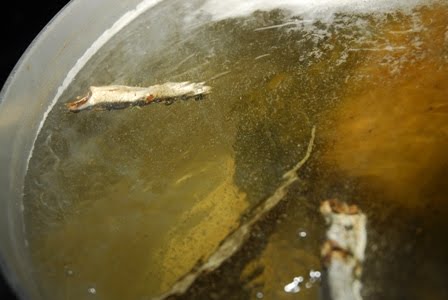
A Snapper's simmered (and now very dead) head
Eating the living is not unique to Japan. "Yin/Yang Fish" is now banned in Taiwan but still popular in mainland China. A live fish is deep fried from the head down and served immediately. The "live head" shows how very fresh the fish is. Personally, I'm ok taking the Chef's word for it....

"Drunken shrimp" are another Chinese delicay. Large prawns are soused in liquor before being consumed. Being drunk is said to make them more amenble to being eaten...

In Korea, "Sannakji" involves consuming the tentacles of live chopped octopus. Its food that "sticks to your ribs"...and your chopsticks....and everything else. Every year several people choke to death eating the dish. Even baby octopus don't go down (your throat) without a fight...


Are the above examples of "extreme freshness" too much for Canadian diners? Possibly. However we still slurp back live oysters by the plate full at restaurants from coast to coast to coast....

Sanbiki is not looking to incorporate "ikizukuri" onto our menu anytime soon! But our guests are often interested in learning more about Japanese cusine and culture. We've got many cook books, Japanese magazines and kids books available at the restaurant for you to read. And we are always eager for more topics to research and blog about!

Thursday, March 15, 2012

UNI=Gonads!?!


"A mouth from front to back" Or so Aristotle thought when he described the sea urchin in his "History of Animals". A long time ago. And they have quite the mouth. Filled with self-sharpening teeth, they can chew through coral, stone and pretty much anything else that gets in their way. And they do move (albeit not terribly fast) on many tiny hidden feet.

It doesn't get fresher than this!
"Uni" is usually translated as "sea urchin roe" In fact, its the "gonads"(that's right; the testicles and/or ovaries...) not just the eggs which are consumed. Uni is served up in Japan, Korea and coastal areas of Spain, Portugal and other countries. Almost always in a raw preparation. In Japan, nigiri sushi or sashimi is very popular.


Uni nigiri sushi is usually served "gunkan"("battleship"shape) style

Winter is considered the best season in Japan and Canada. At its best, uni tastes something like the ocean smells. Slightly salty, but clean and fresh. The texture is buttery but firm, and melts wonderfully in your mouth.

BC is blessed with an abundant, well managed uni fishery. It's taking time for Kamloops palates to warm to the taste and texture of uni, but we've managed a few converts!


A few fun uni facts too interesting to ignore....

Sea urchins are humans closest relative in the inverterbrate world and we share more than 30% of the same genetic make up.

It appears that sea urchins have one of the most highly developed immune systems humans have studied. Researchers hoping to cure Alzheimers and Parkinsons disease as well as cancer are very interested in uni!

Some red sea urchins have lived to two hundred years old!


They've got no brain...but they've got very great tasting gonads! And Sanbiki's got them, but only at certain times and limited quantities to ensure top quality.


More curious culinary blogs to come....

Saturday, March 10, 2012

Wasabi!


My perfect home...

I am neither a powder nor a paste. I am more like a water cabbage. Pollution in Japan's once pristine rivers and streams pretty much wiped me out. Clean, moving water is essential to my survival. Scarcity increases price, and my case is no different. You have probably never encountered me, even at your fanciest Japanese restaurant. I am now more expensive then the seafood I was originally intended to garnish.


Real wasabi root with traditional sharkskin grater


For the price you pay, you won't want to waste me! I'm delicious from the tips of my leaves, down my stalks to the tip of my spicy hot root. If you have the opportunity, add some wasabi leaves to a salad for a kick of pepper and heat.


Wasabi root is best known as a side to sushi and sashimi. Real wasabi starts to lose it's heat as soon as it is grated. That's why in Japan, your Itamae (Sushi Chef) will add the wasabi himself and sneak it in between the rice and the fish in your sushi. He knows how much you need for the fish you have ordered, and limiting the wasabi's exposure to air preserves it's heat and flavour. But even in Japan, it's rare to get the good (real) stuff.

There's nothing really wrong with my "imposters". They pack a punch and will give you the necessary quick sinus sear. Unlike chilis, wasabi's burn goes up through your nose, not down your throat. While intense up front, it fades quickly. Like real wasabi, wasabi mixes contain high amounts of sulforaphane which is believed to have cancer-fighting properties.

You can find many different "wasabi" powders and pastes at Mori Mori Grocery or your local Asian grocery. Wasabi mayo is a great dip for veggies or tempura yam fries. Wasabi flavoured snacks are also popular. Wasabi peas, rice crackers and seaweed are common.


I've made some influential friends over the years. My leaves feature prominently on the family crest of one of Japan's most poweful clans.

Tokugawa "kumon"(family crest)
Tokugawa Ieyasu was Japan's first Shogun and responsible for unifying modern Japan and moving the capital to Tokyo. Wasabi was presented to him as a gift in the early 1600s. He was impressed. Rumour has it that those who grew and consumed me recieved his protection...


Keep checking back for more on Japan's fascinating food and culture!

Thursday, February 9, 2012

FUGU: A Dinner To Die For?


"Fugu". Sounds exotic when you don't know the literal translation..."River Pig". "River", as puffer fish are known to inhabit brackish coastal waters and rivers as well as the open sea. The "pig" part...Well, one look at a pissed-off puffer is explanation enough..

Although there are over 100 species of puffer, fewer than 30 are caught and consumed by the Japanese. They are all deadly if improperly prepared. Most of the poison is in the liver, ovaries and other organs of the fish. Sushi Chefs take 2 years to learn the 30+ step process to rid the fish of its most dangerous bits.


Takafugu, the Tiger Puffer is the most coveted of all. One fish contains enough tetrodotoxin to kill 30 people. 1000 times more toxic than cyanide, a single fatal dose for a human fits on the head of a pin. Despite strict licensing of sushi chefs, several people a year still succumb to fugu's poison every year. Usually fisherman or housewives unafraid to prepare their deadly catch.

Takafugu
(Tiger puffer)

Fugu is considered best in the winter when it's fat content is high. Fugu restaurants often have aquariums full of the fish on display. They're rarely shy when it comes to advertising the specialty of the house....

A fugu meal has several courses. The live fish is usually shown to the guests. It's the end for the unfortunate fugu, but just the beginning for the diners. First, slices of raw fugu are served as sashimi, arranged on beautiful plates, sliced so thin that the designs of the dish can still be admired. Wasabi and soy sauce are no-nos. They would destroy the fish's delicate flavour. Instead a light citrus dipping sauce may be provided or finely chopped green onion. The fins are toasted and served in warm sake. Relax. Have a drink! It'll be ok...

Still alive? You're doing better than the puffer! Next course..fugu chirinabe. Into the hot pot, the fugu flesh goes. Tempura fugu is tasty too, and finally, a rice porridge is made from the broth and nabe (hot pot) leftovers.


Fugu Hot Pot

Was your fugu a boy? Another delicacy may find its way to your table. Shirako. Do you really want to know the English? Don't say I didn't warn you..."sperm sack". Too much information? Smile, nod and swallow. You certainly wouldn't want to offend the fugu Chef now would you? After all, rumour has it in times past he was honour-bound to take his own life if he slipped up with his knife and (literally) lost a customer...

Shirako

Times have changed somewhat. Bando Mitsugoro VIII was a top Kabuki (traditional Japanese drama) actor and considered a "National Treasure of Japan". Despite it being illegal to sell or serve, Bando was a fugu liver fan. Its the most dangerous, but some argue, the most delicious part of the pufferfish. Supposedly enough of the poison is present to make your lips tingle and induce feeling of euphoria. Bando had 4 servings. He went home to bed feeling "as if he were on a cloud" After 7 hours of convulsions and paralysis, his lungs quit and he asphixiated. Perhaps the worst part of death by fugu is that your brain is 100% operational even as the rest of your body (slowly) shuts down. The restaurant was fined, but it is busier than ever...


Puffer fish are also served in Korea. They have found a far more sinister use in some Caribbean countries....."Mix 1 part fugu poison with 1 part poison frog and 2 parts Datura weed to create....
ZOMBIE!


It takes time to get just the right mix, but with a little practice you can add "Black Magic" to your list of talents. Apparently the fugu/toad mix "kills" (almost) the victim and the nasty weed paste wipes out their memory and keeps them docile. Personally, I prefer my medical practitioners and my sushi chefs properly licensed...


More blogs to follow, suggestions always welcome! No fugu for now on our menu. Rumour has it that prepared fillets can be imported to Canada, but not sold at restaurants. Apparently fugu can be farmed and by controlling their diet, it may be possible to produce non-toxic fugu. Kinda takes away some of the excitement though!

Have a great week!

Thursday, January 26, 2012

Strange but True!

SUSHI is not raw fish!


SUSHI actually refers to the vinegared rice that is served in a variety of forms with different ingredients, raw and cooked. "Su"= vinegar"; "shi"= thing/food. The items that ride along with the rice may be from the farm, the field or the sea. Nigiri sushi (above) is the bitesize rice ball topped with something tasty, and maki sushi (below) is the roll with raw/cooked or vegetarian ingredients inside. Then there's chirashi sushi, inari sushi, oshiizushi etc. etc. etc!


SASHIMI is not the same. There's no rice involved, and sashimi is most often slices of raw seafood, although cooked edibles are not unheard of.


Of course, fresh is best. Is your seafood still moving? It's not necessarily all the sake you've been drinking. If you are actually in Japan, it could be you are experiencing "ikizukuri"; not impaired vision. Live fish, shrimp or lobster are sliced up and served reassembled, vital organs intact and heart still beating away....


Every so often a fish gets revenge. "FUGU" or pufferfish, are highly toxic and deadly if improperly prepared.


Sushi Chefs in Japan must be specially licensed to serve fugu. Even so, several deaths a year are reported from fugu poisoning. Usually they're the result of over ambitious homecooks falling victim to their own handiwork. And they probably can't make it look as pretty. Traditionally, fugu sashimi is sliced so thin you can see the design of the plate on which it's presented...


The sashimi has a light, delicate, slightly sweet taste. Is it worth the "risk"? Death by fugu poisoning is not the most pleasant way to make your final exit. Fugu's neurotoxin is 1000 times more powerful than cyanide. It shuts down your nervous system and paralyzes you but you remain conscious and alert. Eventually your lungs shut down and you suffocate. The process can take many hours. I'd spend the extra bucks and stick with a licensed Japanese Chef.

On a lighter note....


KAWAII! (ka wai ee!=Cute!)
And the Queen of Cute is Hello Kitty. Born "Kitty White" on November 1st, 1974 in London, England, she's got a twin sister Mimmy and fans all over the world. They earn her parent company Sanrio over a billion dollars a year. With her own line of diamond jewellery, an EvaAir Hello Kitty airbus and a maternity hospital in Taiwan, this girl deserves a blog of her own. I shall so enjoy researching and writing it. Stay tuned Kitty loving kids....


KAMIKAZE translates as "Divine Wind". Kublai Khan led Mongolian invasions of Japan in the 1200s. Not just once, but twice, massive typhoons drove the Mongols from Japan's shores, and destroyed hundreds of their ships. It was believed that the Japanese Gods had created the storms to protect the Japanese people from the foreign devils. Most non-Japanese understand kamikaze to refer to the WW2 pilots who led suicide attacks on Allied ships.


Modern day vodka drinkers think "kamikaze" and picture a tasty citrus shooter....


And on that happy note! "Kanpai"! (Cheers!)


Sanbiki hopes to see you soon!

Sunday, February 6, 2011

Dashi Stock


It all started one dark and rainy Monday night...Sanbiki was slow, slow, slow...what to do with our beautiful (and empty!) space? We have a great Sanbiki team from Kamloops, Japan and Korea....and yet they were spending another uneventful evening peeling carrots and polishing glasses. We kept our spirits up but we knew we could do better....

Enter Sanbiki's "Sushi School"....


Once a month we converted the far side of the restaurant into a "cooking classroom" where Masato and Kishino could pass along the secrets to rolling great sushi. For $40 and 2 hours, students learned how to prepare sushi rice and fillings. There was the opportunity to make and cut a variety of rolls and pick Masato's brains for ancient Japanese culinary secrets. Afterwards, everyone was free to eat the fruits of their labour or take them home for late night snacking.


Sushi school continues to draw new students and keeps us occupied on those chilly, uneventful Monday evenings. But getting a taste (literally!) for Japanese cooking at home seems to be catching on....sushi graduates started asking questions...complicated, non-sushi related questions that we could not adequately answer over the two hours alloted to our Monday sushi classes...

Enter Sanbiki's "Dashi School"....


More victims...I mean, "students"...for Master Masato and Mistress Kishino....


And what is dashi? Excellent question! Dashi is the most basic Japanese stock and the secret to making delicious miso soup, sunomono salad dressing and many other soups and sauces. Fresh is best but unused dashi can be frozen for later use too.


Dashi is made from katsuoboshi (dried tuna flakes) konbu (dried kelp) and niboshi (dried small silverfish, usually anchovies) Homemade dashi is wonderful; smoky, earthy and packed with "umami". "Umami" can be thought of as "yumminess"; a savoury flavourfulness that comes from the glutamates in the seaweed and fish. Other foods high in glutamates are mushrooms, truffles, soy sauce and interestingly, some cheeses; parmesan for example.


Almost everyone (restaurants included!) use instant powdered dashi. At Sanbiki we have always made our dashi from scratch. We are certain that this has helped us develop a "taste" that is different from our competitors and one which our customers appreciate.

During the dashi lesson, Masato tells students what and how they should taste the dashi. You can smell the ocean from the kelp and a slight smokiness from the dried fish. After making the dashi, Masato shows the class how to use it to make "Oyakodon" or "chicken and egg" rice bowl.


It can also be used in popular sunomono salads made from harusame (yam noodles), cucumber and shrimp or other garnishes.


And as a base for noodles in soup, hot pots or simmered dishes. We use our homemade dashi in Sanbiki's Tempura Udon. It's perfect cold weather comfort food and a customer favourite.


If you're interested in sushi or dashi making classes, please give us a call at the restaurant (377 8857) Suggestions for other cooking classes or menu ideas always welcome...call or send us an email!


Our new Build Your Own Bento dinner special is a hit!! Customers can choose from a variety of sushi rolls, appetizers (hot and cold!) and salads. Starting at only $10, we give you control...go on...Build A Bento tonight!!


Have a great week everyone! Sanbiki loves ya!